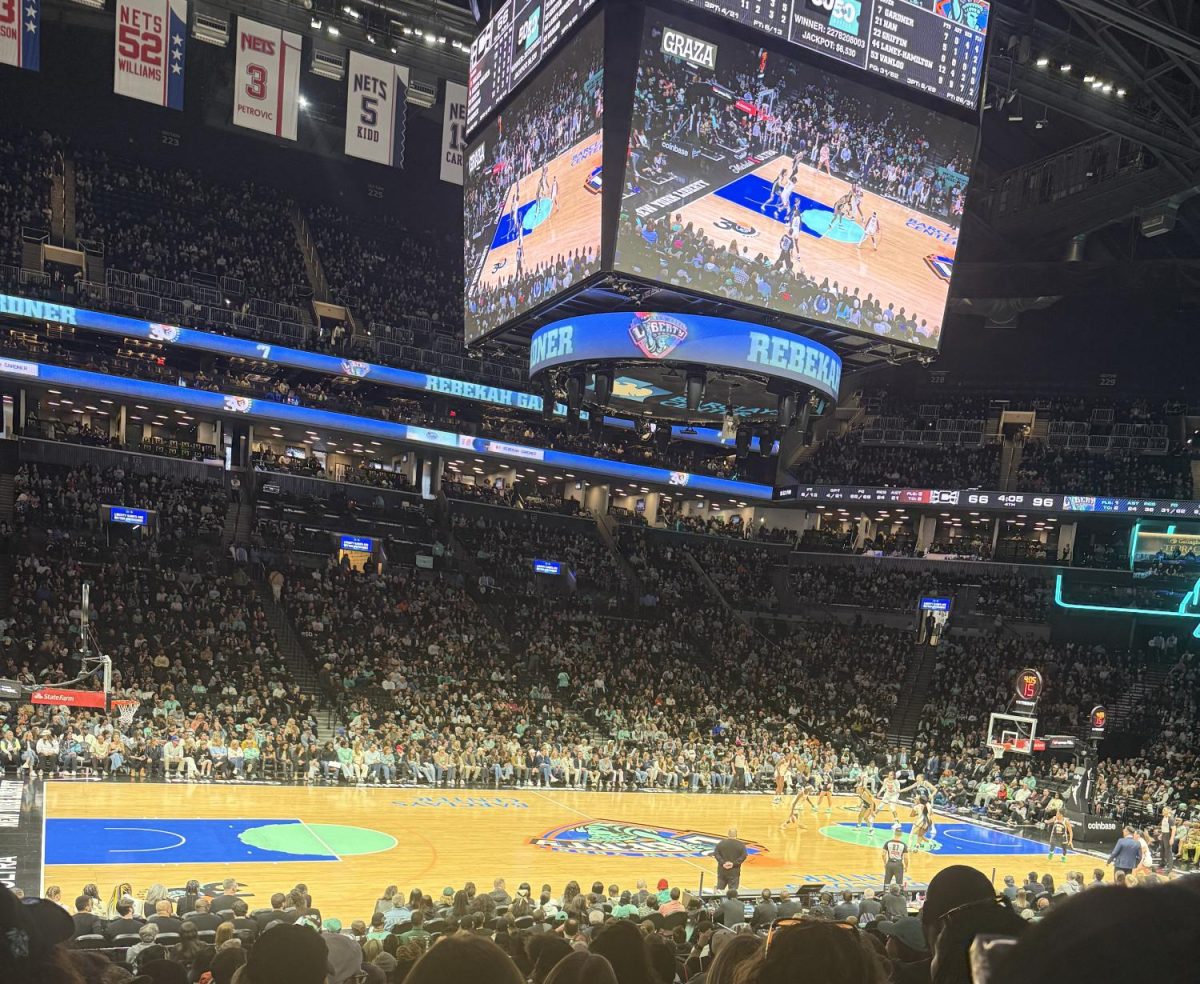
The historic 30th season of the Women’s National Basketball Association hasn’t officially started, and history has already been made with the biggest Collective Bargaining Agreement (CBA) that women’s sports has ever seen. After harsh negotiations and fear that there would be no WNBA season at all, at a New York City meeting, a verbal agreement was reached on March 18th, and a new CBA was officially signed on March 27th, 2026.
The new agreement has significant salary changes from the past, including 20% of gross revenue going to the players, in contrast to the revenue sharing that was never triggered in the past CBA. The salary cap has been raised to $7 million with a minimum salary of $270,000 and a maximum salary of $1.4 million. In the previous CBA, the salary cap was $1.5 million. Last year, Kelsey Mitchell had the highest salary in the league, making $269,244 for the 2025 season, this season she is signed to the Indiana Fever on a 1.4 million dollar supermax contract.
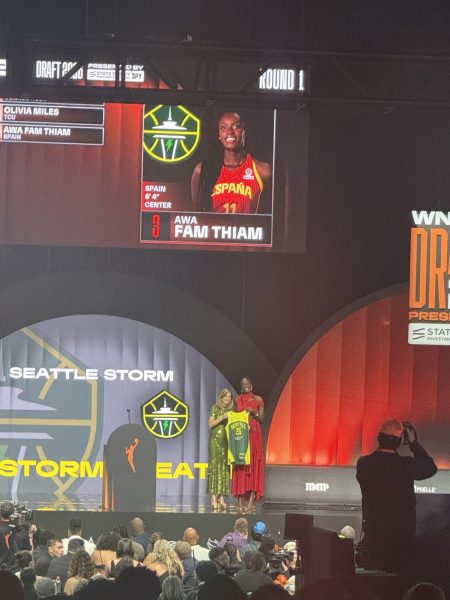
When asked about this CBA’s role in shaping the WNBA’s future, former Sales and Marketing Coordinator for the San Jose Sharks and current Darien High School Business teacher, Ms. Sarina Thomas, commented that, “higher salaries and stronger benefits would help retain star players, align athletes with league growth, and create more compelling marketing narratives. Over the next decade, this could boost media rights value, attract greater investment, and accelerate the league’s overall revenue growth and franchise valuations.”
I spoke with Jayne Appel-Marinelli, who spent seven seasons in the WNBA before becoming the Senior Vice President of Player Relations for the Women’s National Basketball Players’ Association, who commented that “The biggest changes are the sum of the salary and the revenue system getting part of the gross revenue. The more money that the league and the teams make, the players are rising with them and are attached, so that is number one.” Money-related disputes were the eye-catching headlines throughout the negotiations and the number one priority for the players, but this new CBA includes so much more!
Appel-Marinelli, who was heavily involved in the negotiations and in attendance for all meetings, explained that “number two on our player priority list was continuing their housing and making that available for all players.” Players were highly concerned about keeping housing because they didn’t want to be stressed about creating and breaking leases during the season, considering the instability due to the trade culture and lack of protected contracts.
Players were also concerned on advocating not just for the future of the league but also the past, they were able to negotiate for health insurance and payouts for retired players, “There will be a one time payout for players in different bracket ranges based on play but also years and there’s also health insurance being offered to retired players who don’t currently have it, so that is huge. We have so many players, especially recently, who have passed away from breast cancer or a different form of cancer, so this will be a really big add-on for them,” stated Appel-Marinelli.
The CBA has included a pot of money for player education in the past, but it has been expanded to new levels. This money is now available to retired players and has increased from $75,000 to $250,000 per year. This is available to players who want to finish degrees, get certified for post WNBA jobs, or get a second degree! “In the last CBA, I had players who were like hey, I’m retiring, I wanna do the program now, and I had to respond that now you are not eligible because you are not on a roster, so I think that’s a small example of something that will have a big impact on players and recently retired players,” Appel-Marinelli explained.
Players did not get everything they wanted; through the negotiations, they had to make some sacrifices, like compromising on the core designation. “Of course, I can’t necessarily point to one; we had a good amount of players who wanted to completely get rid of the core and didn’t, but we got other big things as well. It’s kind of a trade-off of packages.” Appel-Marinelli remarked. The core allows a team to pick one unrestricted free agent who ended the season on the roster and gives the team exclusive rights to negotiate on behalf of the player. In the new CBA, the cored player has to be offered the new supermax contract that is over 500% larger than the former supermax, and the players can only be cored in their first six seasons.
Overall, Appel-Marinelli wanted people to understand how far the players were willing to go, “I think people underestimated the resolve of the players to truly stick to what they knew they deserved. That’s not easy to get the players to get 100% participation in a strike vote and authorization to strike vote, and to get a unanimous vote approving the CBA. The player participation throughout this whole process has been incredible, and that is something that’s amazing, but these players are intelligent and engaged and willing to stick it out.” Noted Appel-Marinelli.
The players and league were able to agree at the last minute without a delay of the season for one of the biggest CBAs ever. “It’s actually the largest increase between CBA negotiations of sports ever for salary,” and “between men and women’s sports, it is the largest salary percentage increase ever,” Appel-Marinelli remarked.
From spending her entire WNBA career involved in the WNBPA as either a player rep or on the board to working for it Appel-Marinelli is hopeful for what this deal can do for future CBA’s in other women’s sports “I hope it moves all bars higher, in a lot of ways beyond just the dollars, we bargained for minimum standards for facilities, and coaches, and staff, and I hope they see that now and think this is the standard for professional women’s sports and I hope they use our CBA and go better than us so that challenges us to go bigger next time so I think it absolutely rises everyone’s boat and hopefully it just continues to push.”