
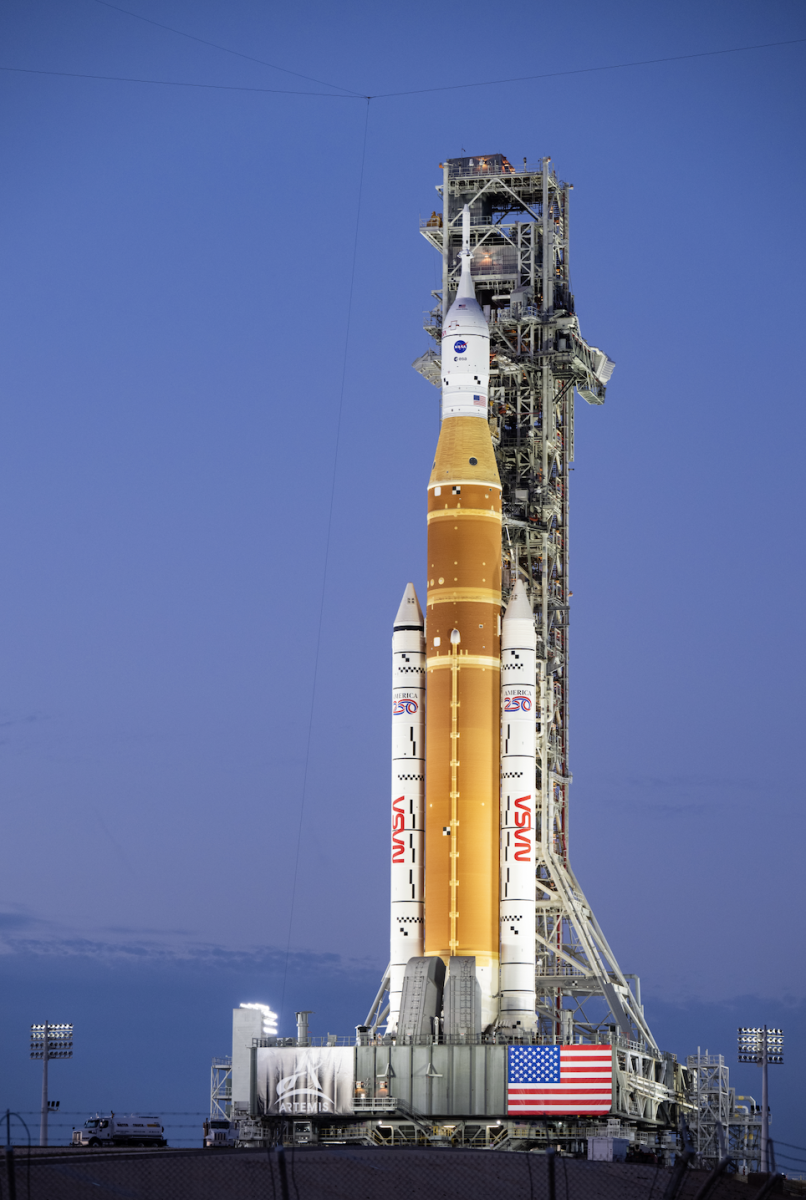
Outer space: the universe beyond earth’s atmosphere. The Milky Way alone is near 150,000 light-years in diameter. Space already seems endless; however, it is still growing. The United States first went to space in 1961, four yearsafter the USSR. Then, in 1969 after trial and error the US succeeded with their infamous mission: Apollo II, landing on the moon. The US first went to the moon in order to establish dominance during the Cold War. Recently, we sent the Artemis II back to the moon but not to land; the ship circled the moon and then returned to earth in a fairly quick ten days. You may be wondering what this mission was for, why we didn’t land, what information we could have gotten, and even what this means for the future of space travel? Here is a rundown of the Artemis II mission.
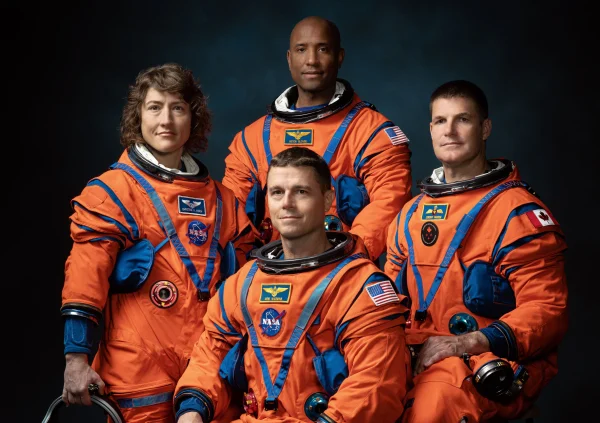
Four astronauts, Reid Wiseman (commander), Victor Glover (pilot), Christina Koch (mission specialist), and Jeremy Hansen (mission specialist) had been preparing for this mission since 2023 (NASA). The mission itself was more so for ensuring the space launch systems, navigation, and overall spacecraft would work correctly for further moon and mars landings. It was the first crewed flight test of the Orion Spacecrafts’ “deep space capabilities” in over 50 years (NASA). Every aspect of the mission was successful. Previously there had been issues with the thermal performance which maintains comfortable temperatures when heating up near the sun and when accelerating towards earth, and when in the freezing, deep space.
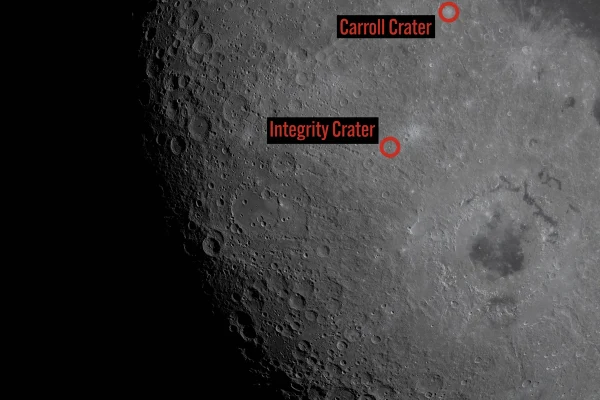
Some of the first clear images of the lunar far side which had never been seen before were taken. The far side of the moon never faces the earth because they both have rotational speeds that perfectly match, causing the same hemisphere of the moonto constantly face the earth (BBC Sky at Night). While observing the far side the astronauts observed two new craters that hadn’t previously been seen. They decided to name one of the craters Carroll (after Wiseman’s wife who died from cancer in 2020), and the other Integrity after their Orion spacecraft (Ap news).
Another exciting aspect of the Artemis II launch would be its extreme trust in physics and mathematical calculations. The path of the ship included a “free-return trajectory” meaning in order to return home it solely used the Moon’s gravity as a slingshot. In fact, the ship did not even bring enough fuel for the way back in case of emergency. In order to ensure success, engineers used what is called the “three-body problem” which compares the gravity between the Earth, the Moon, and the ship itself. As any student who has taken a science course at Darien High School knows, an object in motion stays in motion—Newton’s Laws— meaning once the spacecraft was lined up on its course, no more fuel was needed. As technology continues to advance and we gather more knowledge of space, we become more accurate with our calculations, and also more energy and time efficient with our missions (The Physics of Artemis II).
Next, NASA plans to continue establishing a “sustained lunar presence…in three deliberate phases”. Phase one (Build, Test, Learn) is an ongoing process that applies to every aspect of traveling to space to ensure safety. Phase two includes establishing early infrastructure on the moon in order to make it “semi-habitable” and able to, “support recurring astronaut operations.” Finally phase three includes enabling “long-duration human presence” which is what the next Artemis mission plans to scout out(NASA).

The success of the Artemis II mission will advance our progress exploring space, and it brings humanity one step closer to leaving earth. In response, I asked Darien High School students what their opinions of the possible future of leaving earth and living on a different planet was. Out of 36 students surveyed, 77.8% said they would never live in space even if the technology used to get there was more advanced and secure. In contrast to my own opinions regarding space most student’s who didn’t want to leave earth said, “I don’t think it’s something I’d be interested in, ” “I’m scared of flying,” or that they’re “scared of aliens,” and even, and I quote, “Borin.”
On the other hand, some questioned the safety of the mission. One considered the possibility of having to, “wear an oxygen tank everywhere” which turns space into an ethical debate: Who and how would one access these tanks? One also argued, “If we have the resources to turn a different plant into Earth, we have the resources to turn Earth back into Earth, ” and “humans should not push nature’s boundaries…[it] is a gamble, and there is always a high probability of things going wrong.” Space exploration doesn’t seem to be coming to a halt anytime soon; however, these are some legitimate concerns.
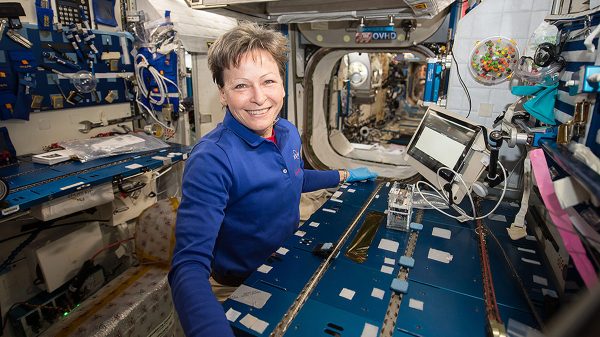
We have technically been living in space for extended periods of time since the 1970’s (Smithsonian). In 2017, Peggy Whitson broke the record for longest stay in space; she was aboard the International Space Station for 665 days. Even though she was in space for nearly two years, Whitson is one person and had access to all of the resources she needed. If an entire civilization of people go to space, we must have learned how to correctly ration and use our food—which is something we still struggle with on Earth—since we won’t have immediate access to agriculture. These are all questions that NASA and other space organization are working to solve. Space exploration is definitely not linear, however, as more Artemis missions are planned for the future NASA’s Phase One (Build, Test, Learn) will be repeated until they are sure they have the correct answers.