



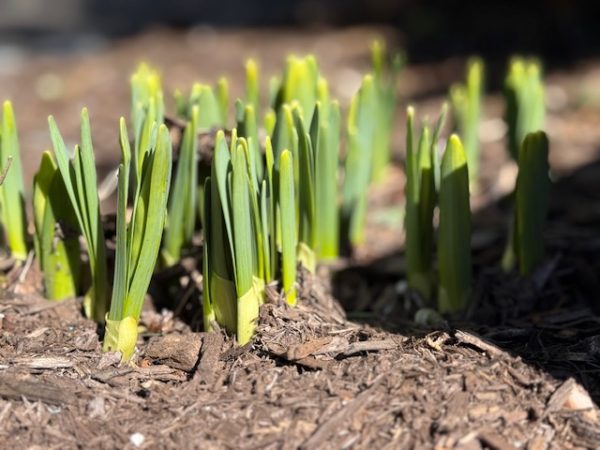
Although the bleak month of February, with its skeletal trees and monotone pale gray sky, is finally behind us, the snow mounds and melting slush are reminders that winter is still upon us. However, it is in February that we begin to see the first signs of spring in the thawing earth, and feel the first pulses of life. The sun’s warm rays stretch across the world after a long winter slumber, bathing the melting snow in rosy hues and encouraging the sprouts to awaken. Daffodil buds poke their sleepy heads up to meet the welcoming sunshine, and carpets of crocuses cover the ground in a veil of purple. At the crack of dawn, the sweet songs of cardinals, chickadees, and tufted titmice lace the air.
If you peer closely among the snow-dappled landscape, you will notice the blooming snowdrops, which are symbols of hope and purity. These white flowers are small and bell-shaped, and seem to bend down to the ground to weep, although this is a mechanism to protect their pollen from precipitation. They are very tolerant to cold temperatures and can even be seen popping up through the snow! The heat that the flowers generate through cellular respiration can actually melt the snow surrounding them. Although they are very common in Connecticut, they are actually native to Europe and the Middle East. Their bulbs contain galanthamine, a substance that is used in medications to treat symptoms of Alzheimer’s disease. Snowdrops are critical for emerging pollinators, and provide an afternoon snack of pollen and nectar.
On the other hand, the skunk cabbage, which is named for the odor that it releases, attracts pollinators in a different way. Throughout spring, it releases a faint smell that appeals to pollinators that are drawn to rotting meat, such as flies and gnats, but will also bring in bees, beetles, and other insects. The smell also wards off herbivores that would otherwise eat it. During February, the skunk cabbage starts to bloom in shaded wetland areas. They have a very unique structure – a maroon hood called a spathe that is protectively wrapped around the spadix, a spike with yellow petalless flowers. The spadix is able to do something remarkable: it has tissues that can generate heat that melt the snow and ice around it. The flower buds can warm up to 70 degrees Fahrenheit in the middle of winter, and it can be 20 degrees warmer in the spathe than the surrounding air. The spathe constantly releases warm air, so the scent travels easily. When the plant is injured, it releases the notorious stench.

In the midst of those wetlands, you will also find wood frogs, which are active in early spring and can be identified by their distinctive quacks. Frogs are cold blooded, so their body temperature matches the temperature of the air surrounding them. Because of this, most frogs hibernate underwater, but wood frogs nestle into the leafy litter on the forest floor. Ice surrounds their organs and forms between their layers of skin and muscles. Their livers produce large amounts of glucose that is sent to every cell and stops dehydration, preventing the cells from freezing. Finally, the wood frog is frozen solid. It has no heartbeat or muscle movement, and doesn’t breathe. Wood frogs are able to survive frozen like this for up to eight months each year! Between late February and March, the wood frog begins to thaw from the inside out, starting with the heart and ending with the muscles. The frog is completely undamaged after these conditions that would kill almost all other creatures. In March and April, they’ll lay their eggs in vernal pools, as the world around them begins to awaken with new life.












Sethu Subramanian • May 12, 2026 at 11:36 am
Pavana writes with clarity and detail. It feels like she is merging with the plant and animal species that she writes about. Nice going!