
Midterms is approaching fast, and if you’re anything like most students, you’re probably starting to feel that familiar mix of panic and procrastination setting in. With some smart planning and the right strategies, you can tackle midterms without getting too overwhelmed.
Making a Schedule
The biggest mistake students make is trying to cram everything into the last few days before each exam. Instead, take a step back and make a realistic study schedule that breaks everything down into manageable chunks. Grab a calendar or planner and write down all your miderms dates, then work backwards to figure out how much time you have for each subject.
When you’re making your schedule, be honest about how long things actually take. If you think reviewing chemistry notes will take two hours, plan for three. This way, you won’t fall behind when something takes longer than expected, and you’ll feel accomplished when you finish early.
Don’t forget to schedule breaks and meals too. Your brain needs fuel and rest to function properly, so cramming for 12 hours straight without eating is just going to make you less effective, not more.
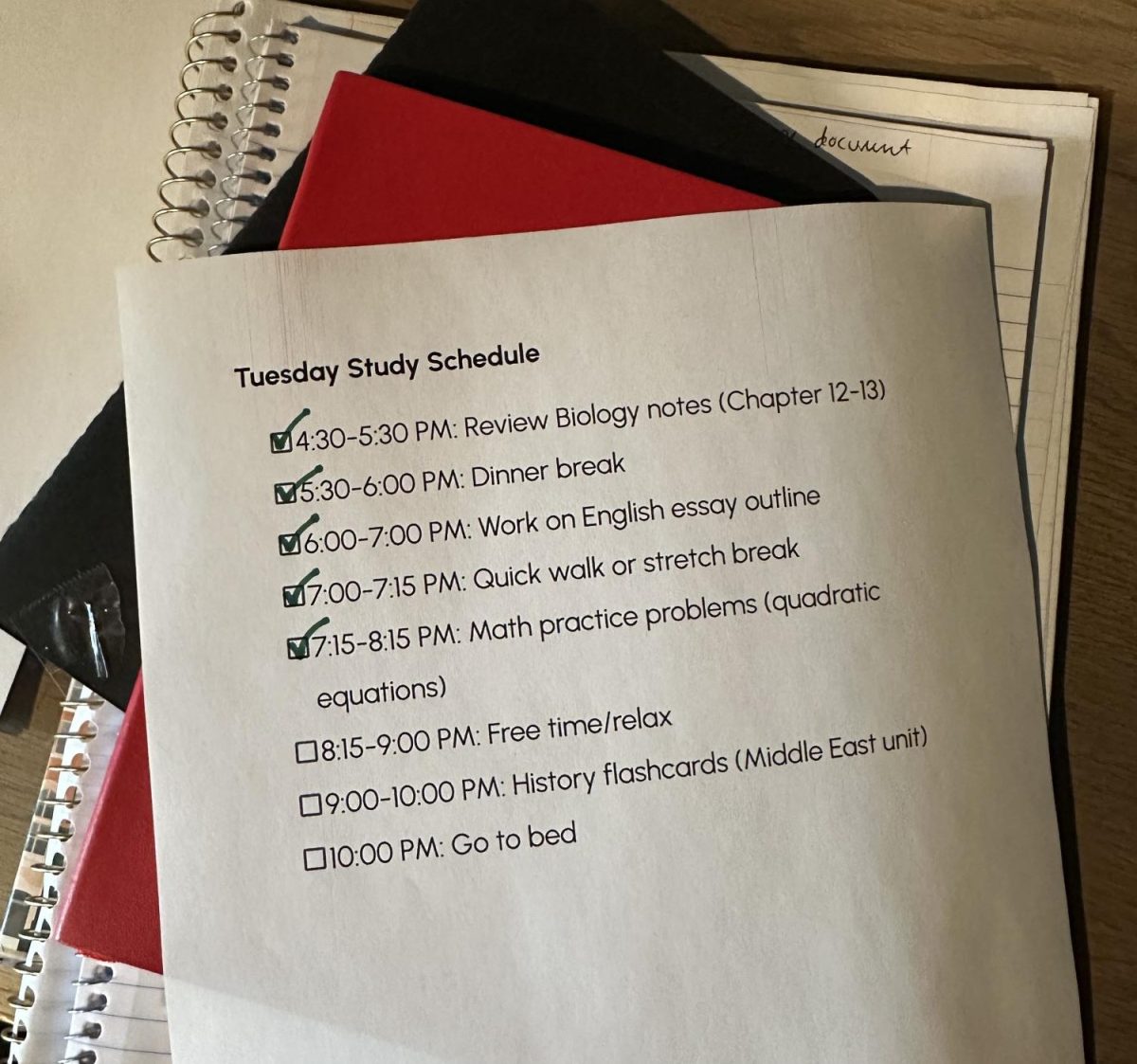
Here’s an example of what a realistic daily study schedule might look like:
Sample Study Schedule – Tuesday
- 4:30-5:30 PM: Review Biology notes (Chapter 12-13)
- 5:30-6:00 PM: Dinner break
- 6:00-7:00 PM: Work on English essay outline
- 7:00-7:15 PM: Quick walk or stretch break
- 7:15-8:15 PM: Math practice problems (quadratic equations)
- 8:15-9:00 PM: Free time/relax
- 9:00-10:00 PM: History flashcards (Middle East unit)
- 10:00 PM: Go to bed
Notice how this schedule has specific topics, realistic time blocks, and actual breaks. Do not try to study for six hours straight or you will just burn yourself out.
Meeting with Teachers
Your teachers want you to succeed and most of them are happy to meet with students who are struggling or want extra help before midterms. Stop by during office hours or ask if you can schedule a quick meeting to go over concepts you’re still confused about.
When you meet with your teacher, come prepared with specific questions. Instead of saying “I don’t understand anything,” try “I’m having trouble with solving quadratic equations” or “Can you help me understand the difference between these two historical events?” This shows you’ve been paying attention and makes the most of your time together.
Many teachers will also give you hints about what to focus on for the midterm. They might not tell you exactly what’s on the test, but they might emphasize the most important concepts or mention topics that you should definitely review.
Study Groups
Studying alone can get boring and lonely, plus it’s easy to procrastinate when you’re by yourself. Setting up group study sessions with classmates creates accountability. When other people are counting on you to show up, you’re much more likely to actually do it.
The most important part of effective group studying is keeping everyone focused. Pick people who are actually serious about studying, not friends who you will just end up talking with.
Group study works especially well for subjects where you can quiz each other or work through problems together. Having someone explain a concept to you in their own words can make it click better than reading it in a textbook.
Take Care of Yourself
You must take care of yourself. You can’t perform your best if you’re running on three hours of sleep and nothing but caffeine. Try to keep normal eating and sleeping habits, even when you’re stressed.
Getting some exercise, even just a 20-minute walk each day, can actually help you retain information better and reduce stress. And please don’t stay up all night cramming the day before a big exam. You’ll remember more and think more clearly if you get a decent night’s sleep.
Study Style
Everyone learns differently, so figure out what methods actually help you remember information. Some people do better with flashcards, some prefer to make detailed outlines or draw diagrams. If you’re a visual learner, try using different colored pens or highlighters to organize your notes. If you learn better by hearing information, consider watching videos or recording yourself reading key notes and listening back to them.
Don’t just re-read your notes over and over, that’s one of the least effective ways to study. Instead, try to comprehend and engage with the information by summarizing it in your own words, making practice questions, or teaching it to someone else.
Stay Positive
Midterms are stressful for everyone, and it’s normal to feel overwhelmed sometimes. If you’re struggling, remember that one test score is not the end of the world. Do your best with the time and resources you have, but don’t feel pressure to be perfect.
If you follow these strategies and put in consistent effort over the next few weeks, you’ll be in much better shape than if you try to wing it at the last minute. Good luck, and remember it’s almost summer!