The conversation about success often becomes tangled in big dreams and goals, yet for students, it almost entirely revolves around two things: college and career. Of course, there is merit to this. People want success. The best way to achieve this is to take everything one step at a time. But, these decisions are not simply academic steps. Mindset matters much more than everything else. How students think during these moments often is much more important than the outcome itself.
For many high schoolers, the name of success is college. Hallway conversations always circle back to acceptance rates, rankings, and reputations, as if the logo on a sweatshirt determines everything, life potential included. This mindset is so distorting. Students start to believe that getting into a prestigious school guarantees success, while attending a less well-known institution is inherently limiting. For the former, it leads to the most dangerous sin of all: entitlement. For the latter, it halts motivation and self-worth. The truth? A student can go to Harvard and still make poor choices and graduate without any form of direction. At the same time, a college dropout can build a meaningful life through self-discipline and strong work ethic, ironically hiring the same Harvard grad who was belittling them once before.
Mrs. Chase, a school counselor at Darien High School, believes students often become too focused on prestige rather than personal fit. She explains that many “students feel pressure from peers, neighbors, and family members” to attend the “most rigorous” college possible because they associate prestige with networking opportunities, career success, and validation. At the same time, she notes that college is also where students “learn so much about themselves through experiencing challenges and living away from home.”
A healthier mindset is to view college as a place to grow. Use the college to provide self-validation, not the other way around.
Also, on a slightly more sinful note, use college to build thicker skin. This way, the college process also becomes an early lesson in resilience. Applications, waiting periods, and responses all require patience and emotional balance. Students who understand that this process does not define their worth are better prepared to handle disappointment and move forward productively. In other words, rejection, in a way, builds character.
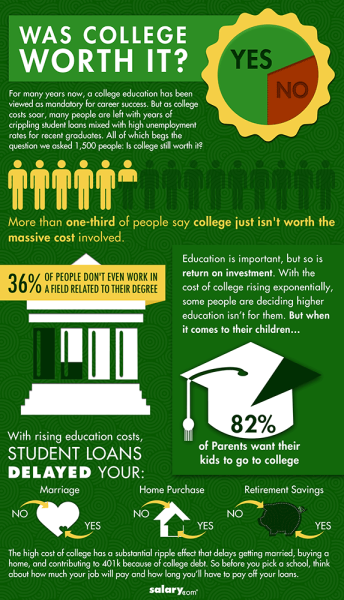
Mrs. Chase emphasizes that resilience comes from self-awareness rather than obsession with statistics. She encourages students to focus on researching schools that “genuinely fit their personalities and goals instead of getting discouraged” by acceptance rates. She also points out that students should lean on the people around them, whether family, counselors, or friends, when the process becomes overwhelming. Ultimately, she believes the college search should feel exciting because students are choosing “their home for the next four years.”
Once in college, the attention shifts towards careers, and a similar thinking pattern occurs. Students begin comparing majors, salaries, and job titles in the same way they once compared schools. They may chase careers that look impressive or profitable without considering whether those paths align with who they are.
Again, this way of thinking is just too narrow.
A more thoughtful mindset recognizes that careers are built at the intersection of two important things: what you like to do and what you are good at. These are not always the same. A student may enjoy a subject but struggle with the skills it requires. Another may have a natural talent in an area they have never seriously considered pursuing. The key to a fulfilling career is finding the overlap between these two categories. And from a greedy perspective, the overlap is where the money is.
Mrs. Chase explains that students discover these overlaps through experience. “Whether it is during class or through experiential learning experiences outside the classroom,” students gradually learn more about their interests and strengths. As she says, students can “identify their interests and characteristics that would be needed for certain careers” and, through experiences, begin “thinking about what they are good at and which career fields may be beneficial to pursue.”
Success ultimately comes down to mindset. Students spend years obsessing over acceptance letters, rankings, salaries, and titles because they believe those things determine their future. In reality, the people who succeed long term are usually the ones who can handle rejection and adapt even when life becomes uncertain. College and careers matter, of course, but they are only opportunities. What students choose to do with those opportunities, along with the mindset they carry into them, is what truly shapes the direction of their lives.