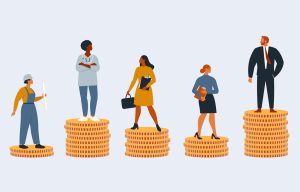
Although Darien, Connecticut, exists in a stiff bubble, it is undeniable—even here—that the wealth gap in America shapes behavior. Those without money strive to gain it, while those with wealth work to preserve it. The result is an apprehensive society driven by the need to remain employed and avoid risk.
In wealthy communities like Darien, financial security offers freedom, and wanting to maintain it is understandable. However, preserving that stability often requires avoiding controversy. This aversion to risk limits not only personal action, but also the possibility of meaningful societal change.
For many Americans, stability is fragile. One missed paycheck, medical emergency, or insurance failure can result in financial collapse. Approximately 61% of Americans live paycheck to paycheck, while 11.5% live below the poverty line. That translates to about $14,580 annually for a single individual. As living costs rise faster than wages, workers become increasingly unwilling to challenge the system that sustains them. Urban research finds 52 percent of people in American families don’t have the resources to cover what it really costs to live securely in their community. Below is a graph illustrating the rise in homelessness by factsusa.com. Becoming one of those statistics, losing one’s humanity, is terrifying.
Fear around homelessness and financial ruin creates a culture of self-preservation. People are less likely to take risks, particularly when confronting injustice. When fewer individuals are willing to act, harmful ideologies are allowed to grow unchecked.
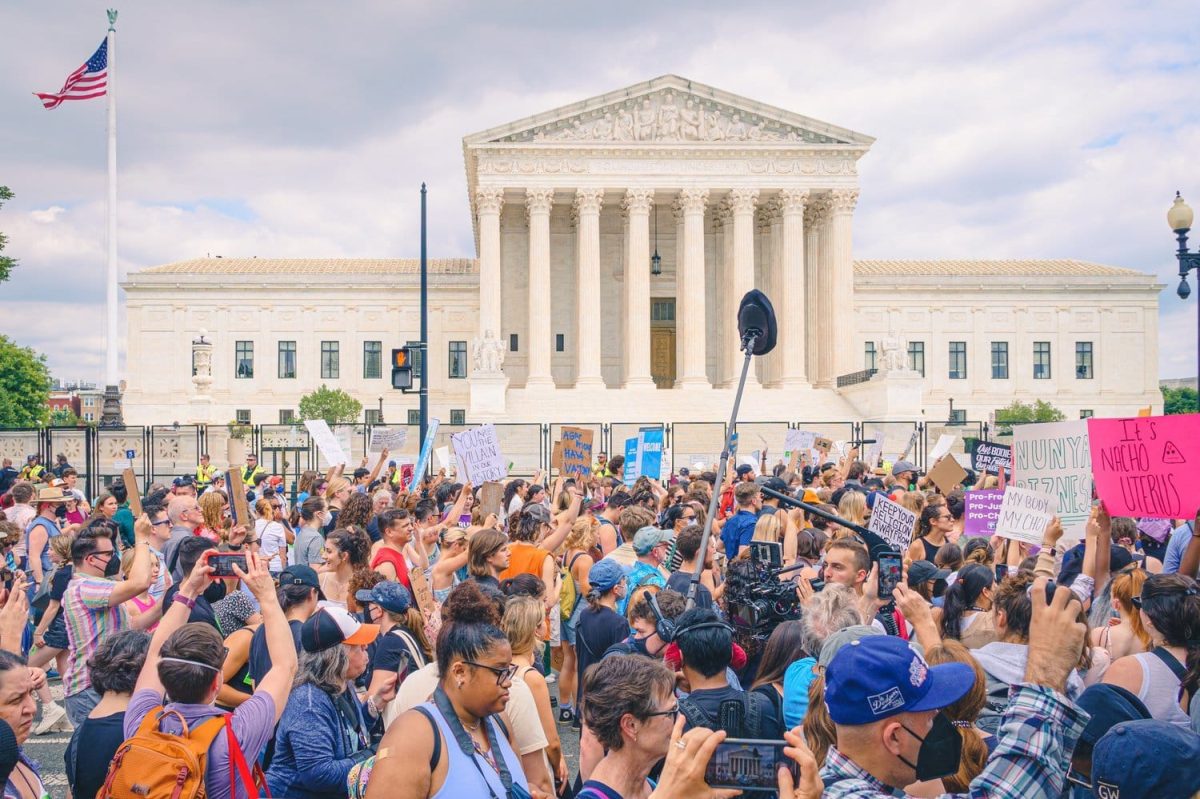
102 people who either work at, attended, or currently attend Darien High School were surveyed, and in this survey, such economic worries were reflected. Sixty-three respondents said they would not attend a protest due to safety concerns. Additionally, 25.5% feared that participation could jeopardize college admissions or scholarships. Others said a lack of free time due to activities like sports and work prevented them from attending events.
These thoughts are not just restricted to Darien, either. Camila Cunha is a Freshman at Northeastern University for bioengineering, and explained that she “…would love to be more politically active and participate in protests, but as an engineer, I find it incredibly difficult to skip class for a day, and it would put me incredibly behind.” Even though people may want to become politically active, they understandably have to keep themselves afloat before all else.
This reluctance is reinforced by isolation. According to the American Psychological Association, over half of adults report feeling isolated (54%), left out (50%), or lacking companionship (50%) at least some of the time. In such a disconnected society—where many individuals do not know even five of their neighbors—the willingness to risk personal stability for others declines.
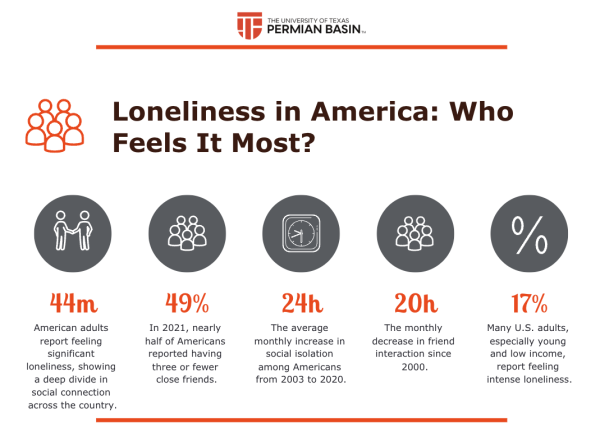
In a time of immense political divides, this isolation makes people less willing to discuss political topics, leading to more ignorance and a lack of willingness to engage in protests or activism for their beliefs. Former Darien High School student and NEIRAD author Ryan Plank discussed some of the political rigidity in the Darien area in his article DHS: A place of learning, or a place of divide?
The issues mentioned in Plank’s article have progressed and worsened, and it is now more than ever impossible to consider people’s political stances as just opinions. I urge everyone to consider that when people’s opinions involve dictating the humanity and rights of others, it becomes a matter of defending civil liberties, and labeling these stances as simple personal opinions is dismissive of their impact and intent.
On top of rising isolation and a lack of interest in one’s fellow citizens, employment has become central to identity and survival. Losing a job can mean losing housing, stability, and dignity. This fear shapes how people view others as well. Unhoused individuals are often ignored or blamed, reinforcing the idea that economic failure is a personal fault rather than a systemic issue.
The assumption that employment guarantees stability is false. An estimated 40% to 60% of unhoused individuals are employed, yet still lack permanent housing. That is, if job-seekers can even find a job. This past February, 92,000 jobs were cut. New York Times author Syndey Ember warns “…the job cuts in February were consistent with a broader decline rather than a blip. In December, employers shed 17,000 jobs, down from an earlier estimate of a gain of 48,000, and hiring figures for January were also revised downward slightly, to 126,000. Taken together, job growth for the last three months effectively slowed to zero”.
The American Dream, rooted in post-World War II suburban life, promotes an ideal of financial security and family stability. However, this vision was historically limited in access and is increasingly unattainable today. Despite this, the belief persists that hard work alone ensures success, obscuring the structural barriers many face.
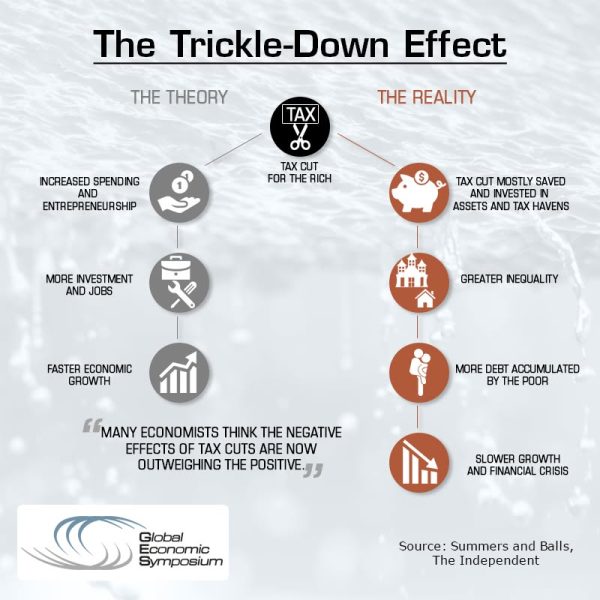
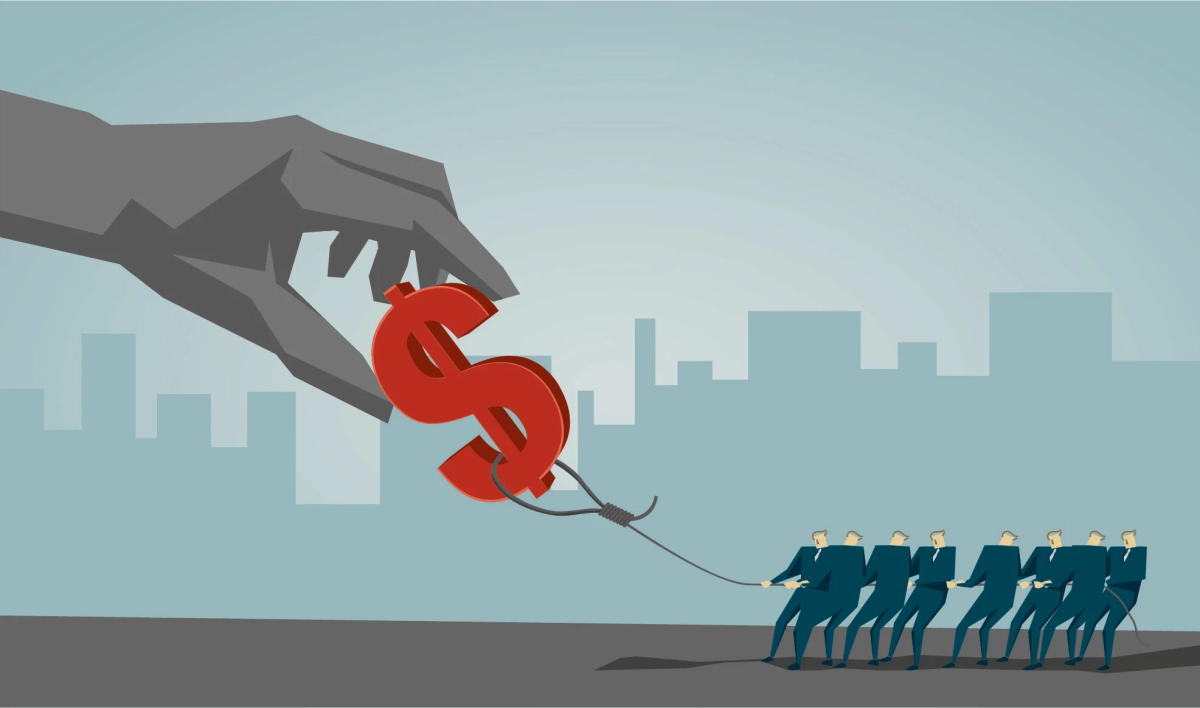
These conditions are not accidental. Corporate strategies that prioritize profit over worker stability, an effort popularized by figures like former General Electric CEO Jack Welch, normalize job insecurity. Similarly, economic policies such as Ronald Reagan’s “trickle-down economics” expanded wealth inequality. By 2025, the top 1% of U.S. households controlled 31.7% of the nation’s wealth.
As a CBS News report stated, “The incomes of the rich grew much faster in countries where tax rates were lowered. Instead of trickling down to the middle class, tax cuts for the rich may not accomplish much more than help the rich keep more of their riches and exacerbate income inequality.”
In such conditions, democratic participation weakens, and the foundations for authoritarianism begin to take hold. The rise of economic insecurity in America is as much of a social and political issue as it is financial. When one’s quality of life depends entirely on one’s employment status, and employment itself is unstable, people are forced into silence. They become less willing to question authority, less able to support one another, and more vulnerable to narratives that exploit fear and division.
Sources for Statistics
- Paycheck-to-paycheck: https://www.cnbc.com/2023/01/23/share-of-americans-living-paycheck-to-paycheck.html
- Poverty rate & threshold: https://www.census.gov/library/publications/2023/demo/p60-280.html
- Unhoused employment estimate: https://www.usich.gov/resources/uploads/asset_library/Employment-and-Homelessness.pdf
- Wealth distribution: https://www.cbsnews.com/news/top-1-percent-wealth-us-inequality/
- APA loneliness study: https://www.apa.org/news/press/releases/stress/2023/collective-trauma-recovery