

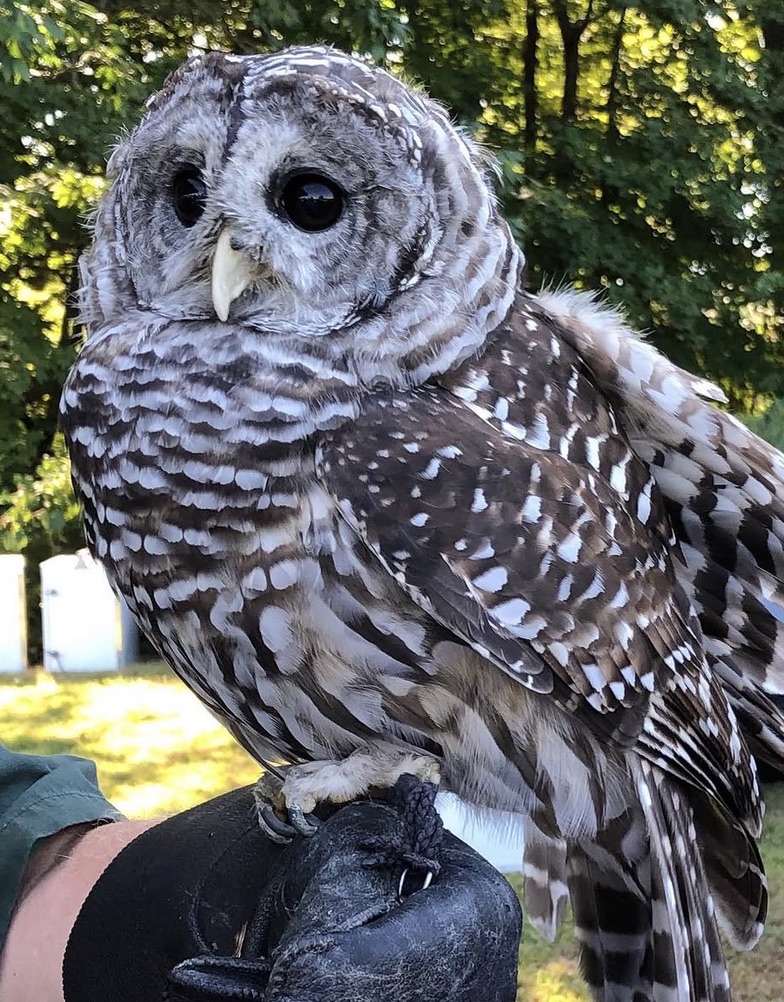
“Who cooks for you? Who cooks for you all?” After night falls, you may be lucky enough to hear this rhythmic vocalization of the Barred Owl, Connecticut’s most common owl. They live here year-round, choosing to find their homes in forests with older trees near bodies of water. They are easily recognizable with their mottled brown, white and gray feathers, and the distinct vertical brown streaks painted across their white chests that give them their name. Their dark, soulful eyes, rounded head and lack of ear tufts give them a gentler appearance than their yellow-eyed, more intimidating rival, the Great Horned Owl, who also calls Connecticut its home.
If you have not had the chance to see or hear a Barred Owl in Darien, you can catch a rare glimpse into the life of a nesting pair by watching the Cornell Lab Barred Owl Cam in Zionsville, Indiana. A nest box is mounted 30 feet high on a pignut hickory tree, with one camera installed inside of the box and another that provides a view of the exterior of the box. Barred Owls do not build their own nests; they can nest in a tree hollow, a nest built by another animal, or even a nest box, which humans can build. Every year, a pair arrives at this particular nest box and lays eggs. This year, two eggs were laid, and their fate will hinge on the combined efforts of their parents.
The female will stay in the nest box for about a month, sitting on her eggs all day to keep them warm and toasty, and rarely leaving to ensure that the temperature remains steady. She is able to keep them so warm because of a patch of skin on her underside with no feathers, known as a brood patch. Her mate spends his days hunting for food to bring to her, and, once the eggs hatch, to the owlets as well. He could bring her a variety of foods to eat, including mice, bats and crayfish. Last month, the male delivered an American Goldfinch to the female, which she swallowed whole! He will make deliveries during the evening or night, but these deliveries can be rare, and she could lose up to 30% of her body weight during the incubation period. Sometimes, he will perch outside of the nest and communicate with her about food, or simply to strengthen their bond. Barred Owls mate for life and form lifelong bonds with one another, sealed by the instinctual drive to protect and raise their young.
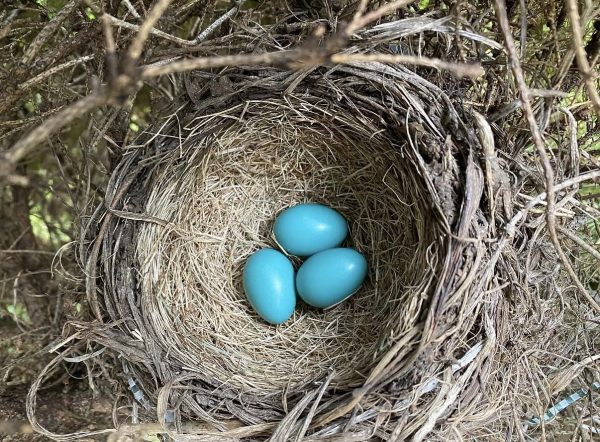
On April 12th, the first owlet hatched, and two days later, the second one followed, both covered in fluffy white down. Owlets use an egg tooth, a projection on their bills, to poke a hole into the shell. They work to grow the crack and break the egg open, which can take over 12 hours. For about four to eight weeks, the owlets will stay in the nest box with their mother, growing and building their strength. The male will still bring them food, which the mother tears into pieces that the owlets can eat. After a few weeks, she can leave them alone in the nest box and go hunt herself. Once the owlets are ready, they will emerge from the nest for the first time and engage in a behavior called branching, in which they climb and hop around their nest tree and nearby trees. If they fall to the ground, they can use their talons and beaks to climb back up the trunk. Once they are around three months old, they will attempt to fly for the first time. We may never know what becomes of them; all we can do is hope that these fledglings survive and one day maybe even each have owlets of their own.
www.owlresearchinstitute.org/barred-owl
www.allaboutbirds.org/cams/barred-owls
www.allaboutbirds.org/news/bird-cams-faq-barred-owl-nest
www.audubon.org/field-guide/bird/barred-owl
youtube.com/watch?v=_t0Q-2CbRwk&list=PLXJZ8Lf9KIx5yHZgAcRiCgPUbT1qlI7oj&index=10
www.allaboutbirds.org/cams/barred-owl-cam-welcomes-two-downy-owlets-in-indiana/